Building Defects and Expert Evidence in Property Disputes
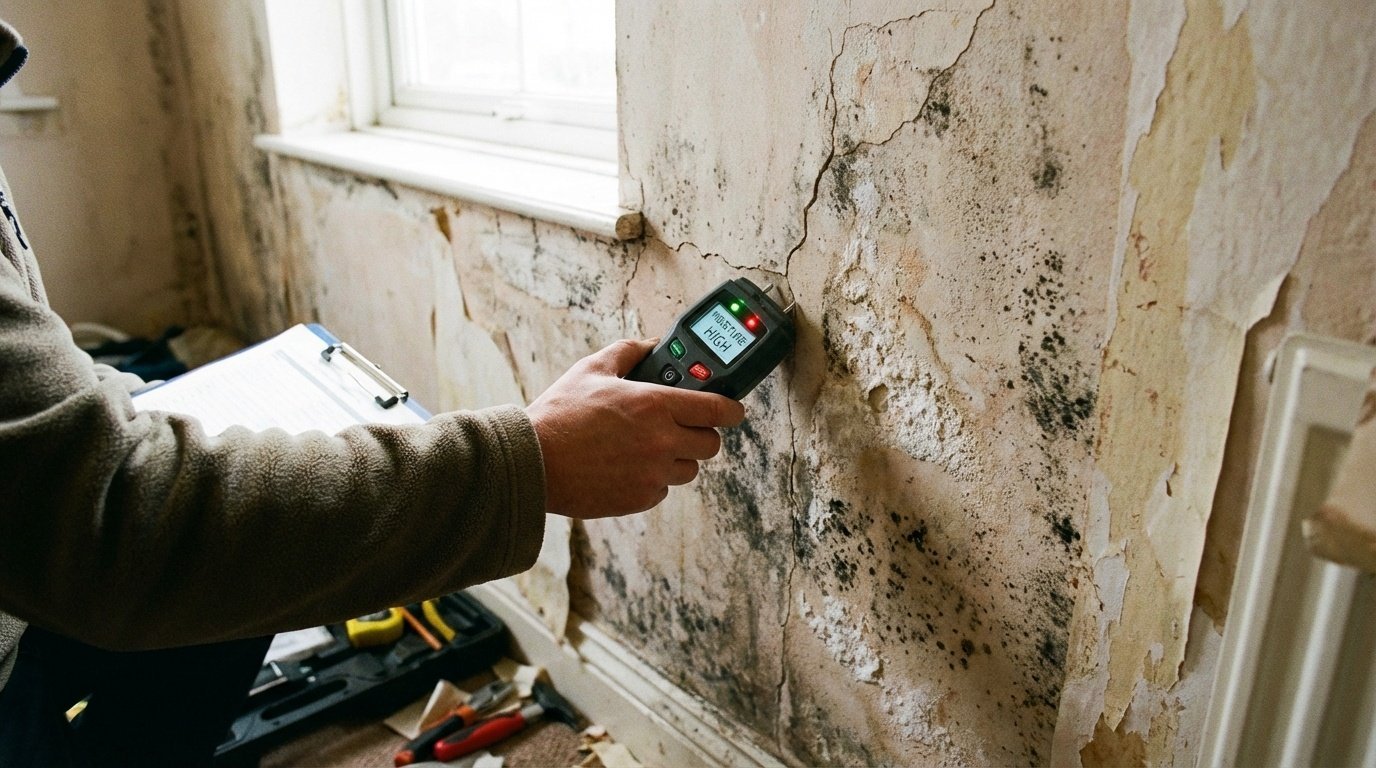
Building defects expert evidence plays a crucial role in resolving property disputes involving construction quality, structural failures, water ingress, and contractor negligence. Whether you're a homeowner dealing with defective new-build properties or a developer facing claims from purchasers, expert witness testimony from RICS chartered surveyors provides the technical analysis needed to establish liability, causation, and remedial costs in building defect litigation.
What Constitutes a Building Defect?
A building defect is any failure, imperfection, or inadequacy in the design, materials, workmanship, or performance of a building or its components that prevents the building from meeting expected standards of fitness for purpose, durability, or safety. Building defects range from minor cosmetic issues to serious structural failures threatening building integrity or occupant safety.
Common categories of building defects include structural defects affecting foundations, walls, floors, and roofs; water penetration and damp issues; thermal performance failures and condensation problems; fire safety deficiencies; defective services installations including plumbing, heating, and electrical systems; and cosmetic defects affecting finishes and appearance.
Understanding whether a particular issue constitutes a defect requiring remediation, or merely acceptable variation within building tolerances, requires expert analysis. Expert witness RICS professionals assess defects against applicable building regulations, British Standards, industry best practice, and contractual specifications to determine whether construction meets required standards.
When Is Expert Evidence Required in Building Defect Cases?
Expert evidence becomes essential when building defect disputes involve technical questions beyond the knowledge of courts, arbitrators, or adjudicators. These questions typically include: what defects exist and what caused them? Did the construction comply with Building Regulations, British Standards, and contractual specifications? What remedial works are necessary? What is the reasonable cost of repairs? Has the building suffered diminution in value? Could the defects have been detected earlier through proper supervision or inspection?
In residential property transactions, building defects discovered after purchase often lead to claims against sellers, builders, or professional advisors. Commercial property disputes may involve substantial defects affecting large-scale developments, with significant financial implications for all parties. Professional negligence claims against architects, surveyors, or contractors require expert evidence establishing the standard of care expected and how the defendant's conduct fell short.
The Civil Procedure Rules Part 35 governs expert evidence in court proceedings, requiring experts to provide objective, impartial opinions to assist the court rather than advocacy for the instructing party. Expert witnesses must have appropriate qualifications, training, and experience relevant to the specific building defects at issue.
Types of Building Defects Requiring Expert Analysis
Structural Defects
Structural defects affect the load-bearing elements of buildings, including foundations, walls, floors, roofs, and structural frames. Common structural issues include foundation settlement causing cracking, inadequate foundations on poor ground conditions, structural movement from tree root activity or subsidence, defective lintels and beam installations, inadequate structural connections, and roof spread causing wall bulging.
Expert structural analysis determines whether movement represents ongoing deterioration requiring intervention or historic settlement that has stabilized. Structural engineers and building surveyors use crack monitoring, level surveys, structural calculations, and ground investigations to establish causes and appropriate remedies.
Water Ingress and Damp
Water penetration represents one of the most common building defects, causing damage to building fabric, finishes, and occupant health through mold growth. Sources of water ingress include defective roofing allowing rainwater penetration, failed waterproofing in basements or below-ground structures, defective external wall construction, leaking plumbing or heating systems, rising damp from failed damp-proof courses, and condensation from inadequate ventilation or insulation.
Identifying the source and mechanism of water ingress requires systematic investigation using moisture meters, thermal imaging cameras, and sometimes invasive investigation of building fabric. Expert witnesses must differentiate between different moisture sources, as remedial strategies differ significantly between rising damp, penetrating damp, and condensation.
Defective New Build Properties
New build residential properties increasingly feature in defect litigation, with purchasers discovering significant defects shortly after completion. Common new build defects include inadequate thermal performance and air tightness, fire safety deficiencies particularly in multi-story buildings, acoustic insulation failures, defective external cladding and render systems, poor workmanship in finishes, and incomplete building control compliance.
Expert evidence in new build defect cases must reference the NHBC standards, Building Regulations compliance, and contractual specifications. Experts compare actual construction against specified standards to establish whether defects constitute breaches of contract, statutory duties, or negligence.
The Expert Witness Investigation Process
Document Review and Background Research
Expert investigations begin with thorough document review including purchase contracts, building specifications, planning and building control approvals, construction drawings, schedules of work, correspondence between parties, previous survey reports, and photographs documenting defect progression.
This desktop research provides context for site investigations, identifies specific allegations requiring investigation, establishes what standards should have been met, and highlights areas requiring focused examination. Understanding the chronology of construction, discovery of defects, and communications between parties is essential for forming opinions on liability and causation.
Site Inspections and Testing
Detailed site inspections form the cornerstone of defect analysis. Expert witness reports must be based on firsthand observations supported by appropriate testing and measurement. Typical inspection activities include visual examination of all accessible areas, measurement and recording of defects, photography and videography, moisture testing using calibrated meters, thermal imaging to identify insulation defects or moisture, and opening up of building fabric where necessary to examine concealed construction.
Opening up works require careful planning and agreement between parties regarding scope, cost responsibility, and making good. Experts must balance the need for thorough investigation against proportionality and minimizing additional damage to properties.
Causation Analysis
Establishing the cause of building defects is often the most contentious aspect of expert analysis. Multiple potential causes may contribute to observed defects, requiring careful analysis to apportion responsibility fairly. Common causation questions include: did defects result from design errors, specification inadequacies, poor workmanship, defective materials, or inadequate maintenance? When did the defect originate? Could the defect have been prevented through different construction methods or materials? What was the proximate cause of damage?
Expert opinions on causation must be supported by clear reasoning, technical literature, and reference to industry standards. Where multiple potential causes exist, experts should explain which is most probable and why, while acknowledging any uncertainty in the analysis.
Quantifying Remedial Costs and Diminution in Value
Scope of Remedial Works
Experts must specify appropriate remedial works addressing defects while being proportionate to the severity of issues and the building's intended use and lifespan. Remedial strategies should comply with current Building Regulations, use appropriate materials and methods, address underlying causes rather than merely treating symptoms, and minimize disruption to building users.
Alternative remedial approaches should be considered, with experts explaining preferred options and why alternatives may be less appropriate. Remedial specifications should be sufficiently detailed to allow accurate cost estimation by quantity surveyors.
Cost Assessment
Remedial cost assessment typically involves quantity surveyors preparing detailed cost estimates based on specifications provided by technical experts. Costs should include all directly associated works such as access scaffolding, protection of retained building elements, temporary accommodation if necessary, professional fees, and VAT where applicable.
In some cases, betterment may need to be considered—where repairs upgrade the building beyond its pre-defect condition, a reduction in compensation may be appropriate. Conversely, if repairs cannot fully restore the building to its original condition, additional compensation for residual effects may be warranted.
Diminution in Value
Where properties suffer building defects, market value may be reduced even after repairs. Factors affecting diminution in value include stigma associated with previous defects, reduced marketability of properties with defect histories, ongoing uncertainty about defect recurrence, and costs of accelerated maintenance or replacement of affected components.
Chartered surveyors with expertise in property valuation provide opinions on market value impact, comparing hypothetical values of defect-free properties against actual condition or post-repair condition. These valuations inform settlement negotiations and court awards.
Common Issues in Building Defect Expert Evidence
Disputes Between Experts
Building defect cases often feature competing expert opinions from plaintiff and defendant experts. Key areas of disagreement typically include whether observed conditions constitute defects or acceptable variations, causes of defects and responsibility allocation, necessity and scope of remedial works, and cost estimates for repairs.
Courts encourage experts to meet and produce joint statements identifying agreed facts and narrowing disputes to genuine areas of disagreement. These discussions often achieve significant consensus, focusing litigation on truly contentious issues. Experts should approach joint meetings constructively, seeking agreement where evidence supports it while maintaining independent professional judgment.
Proportionality Concerns
Expert evidence represents a significant cost in building defect litigation. Courts expect expert evidence to be proportionate to the dispute value and complexity. Parties should consider whether less expensive methods of evidence gathering might suffice, whether joint expert appointments might be appropriate, and whether alternative dispute resolution including mediation might be more cost-effective than full litigation.
The emphasis on proportionality means experts should focus investigations on material issues likely to influence case outcomes, rather than exhaustive examination of every minor concern.
Case Studies in Building Defect Expert Evidence
Case Study: New Build Property Defects
A purchaser of a new-build home discovered extensive defects within two years of purchase, including water penetration through external walls, inadequate ventilation causing condensation and mold, defective heating system installation, and poor-quality finishes. The purchaser claimed against the developer for breach of contract and against their solicitor for negligence in failing to advise on appropriate protection.
The expert building surveyor's investigation revealed that external wall construction failed to include proper cavity trays and wall ties, resulting in water bridging the cavity. Ventilation provision was below Building Regulation requirements. The expert specified comprehensive remedial works including external wall remediation with scaffolding access, improved ventilation installation, full redecoration following mold treatment, and heating system rectification.
Cost quantification by a quantity surveyor established repair costs exceeding £120,000. The property valuation expert opined that market value would remain diminished by 8% even after repairs due to property history. The comprehensive expert evidence supported a favorable settlement for the purchaser without trial.
Case Study: Historic Property Structural Movement
Owners of a Victorian terrace property claimed against their insurer following cracking attributed to subsidence. The insurer disputed whether damage resulted from insured subsidence or uninsured general settlement and deterioration. Expert evidence was required to establish causation and appropriate remediation.
The structural engineer's investigation included crack monitoring over twelve months, level surveys, trial pit excavations to examine foundations, and arboricultural assessment of nearby trees. Evidence established that while some historic settlement had occurred, recent movement resulted from clay shrinkage due to tree root activity—an insured peril.
The expert specified tree management and underpinning to affected sections of foundation, with associated crack repairs. The insurer accepted liability and funded the specified works following expert evidence demonstrating insured causation.
Working with Building Defect Expert Witnesses
Selecting Appropriate Experts
Choosing the right RICS accredited expert witness is critical to case success. Considerations include relevant technical qualifications and professional memberships, specific experience with the type of defect and building at issue, track record of expert witness work, ability to communicate technical matters clearly, and independence and objectivity in previous cases.
Some building defect cases require multiple experts with different specialisms. For example, structural engineers for foundation and structural frame issues, building surveyors for general construction defects, mechanical and electrical engineers for services issues, and quantity surveyors for cost assessment.
Instructing Experts Effectively
Clear instructions are essential for efficient expert engagement. Instructions should identify specific questions for the expert to address, provide relevant background documents, explain any agreed facts or assumptions, specify deadlines for reports, and clarify budget constraints if applicable. Avoid overly restrictive instructions that constrain the expert from addressing relevant issues identified during investigation.
Conclusion: The Critical Role of Expert Evidence in Defect Disputes
Building defects expert evidence provides the technical foundation for resolving complex property disputes involving construction quality, structural integrity, and contractor performance. Expert witness RICS chartered surveyors combine detailed technical investigation with clear communication of findings to courts, arbitrators, and parties in mediation.
Whether you face claims regarding defective construction, need to pursue contractors or professionals for negligent work, or require independent assessment of building condition, expert evidence from qualified surveyors is essential. Comprehensive defect analysis, fair causation assessment, and accurate cost quantification enable informed decision-making and just resolution of building defect disputes.
Our team of RICS accredited building surveying experts provides comprehensive defect investigation and expert witness services for residential and commercial property disputes across the UK. Contact us today to discuss your building defect case and how our expert evidence can support successful outcomes.
Frequently Asked Questions About Building Defects Expert Evidence
What qualifications should a building defects expert witness have?
Look for RICS chartered building surveyors or structural engineers with specialist experience in building pathology, defect diagnosis, and expert witness work. RICS accreditation demonstrates professional competence and adherence to ethical standards.
How long does a building defect investigation take?
Investigation timescales vary based on property size and complexity. Simple residential defect surveys may take 1-2 days for site work plus report preparation. Complex commercial buildings or cases requiring opening up works may take several weeks or months.
Can building defect cases be resolved without going to court?
Yes, many building defect disputes resolve through negotiation, mediation, or alternative dispute resolution. Expert evidence supports settlement discussions by clarifying technical issues, quantifying costs, and providing objective assessment helping parties reach fair agreements.
Who pays for expert witness services in defect disputes?
The party instructing the expert initially pays their fees. In litigation, courts may order the losing party to contribute to the winner's expert fees, but this is not automatic. Consider insurance policies that may cover expert fees in property disputes.
What is the difference between a survey report and an expert witness report?
Survey reports advise clients on property condition for transaction purposes. Expert witness reports are prepared for court proceedings, must comply with CPR Part 35, demonstrate complete independence, and owe a primary duty to the court rather than the instructing party.
Should I get my own expert or agree to a joint expert?
In lower-value cases, courts often order joint expert appointments to reduce costs. In complex or high-value disputes, parties typically each appoint their own expert. Discuss the appropriate approach with your solicitor based on case value and complexity.
Building Defect Expert Witness Services
Our RICS chartered surveyors provide comprehensive defect investigation and expert evidence for property dispute resolution.
Get Expert Assessment